
On this page


Structure of a PV System: From Module to Grid Feed-in
Introduction: From Solar Module to Solar System
The umbrella term "solar system" covers both photovoltaic systems and solar thermal systems. Photovoltaic or PV systems convert sunlight into electrical energy, whilst solar thermal systems generate heat. This article focuses on PV systems.
Having explored how a single solar cell works in the previous article From Photon to Volt: How Does a Solar Cell Work?, we now examine the bigger picture: how do individual cells become a complete solar system?
From Cell to Farm
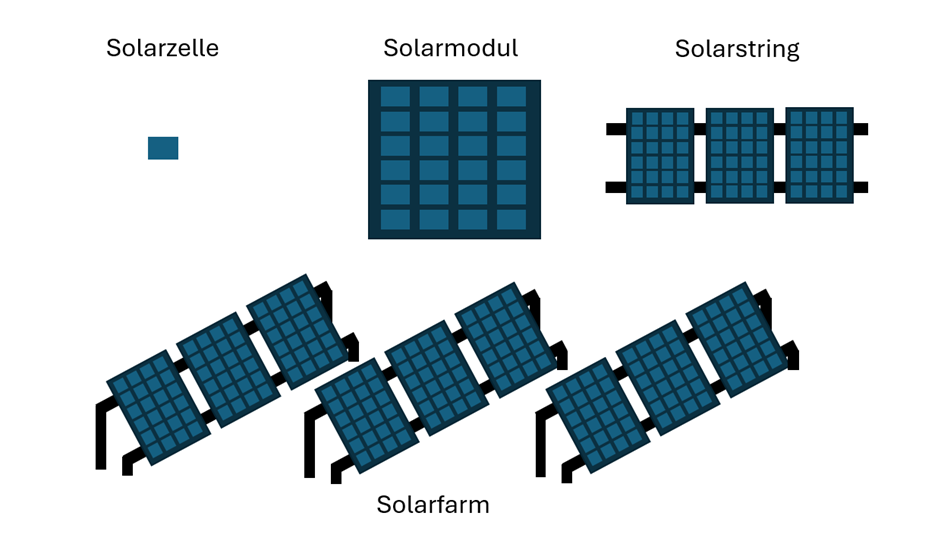
The hierarchy of a photovoltaic system is clearly structured:
- Solar cell → Module: Multiple cells are electrically connected and mechanically encased in a frame
- Module → String: Modules are connected in series to achieve the voltage required by the inverter
- String → System: Multiple strings feed into one or more inverters
- System → Farm: Many systems together form a solar park
Even a single solar module or string can constitute a complete solar system – as with a balcony PV installation.
However, the arrangement of solar cells and modules is only half the picture. A functional system also requires:
- Mounting brackets and installation systems
- Cables and junction boxes
- Power electronics (inverter, MPPT)
- Optional: battery storage
- Electricity meters and monitoring systems
Mounting and Racking
Solar modules can be installed in many locations:
Residential Applications
- House roofs (pitched or flat roof)
- Garages and carports
- Balcony systems
- Façades
Commercial and Industrial Applications
- Factory buildings and office blocks
- Ground-mounted systems (solar parks)
- Agri-PV (combined with agriculture)
Mounting Types
Fixed mounting:
- Modules are immovably mounted on roofs or open ground
- Geometrically bound to buildings or brackets
- Simple, cost-effective, low maintenance
- Standard solution for most applications
Tracking systems:
- Modules follow the sun's path throughout the day
- Movement via electric motors or hydraulics
- Yield increase of 15–35% achievable
- Higher costs and maintenance requirements
- Economically viable primarily for large-scale installations
For all mounting types: robustness, wind load and, for buildings, roof structural capacity determine the choice of mounting system.
Current Path: From Module to Socket
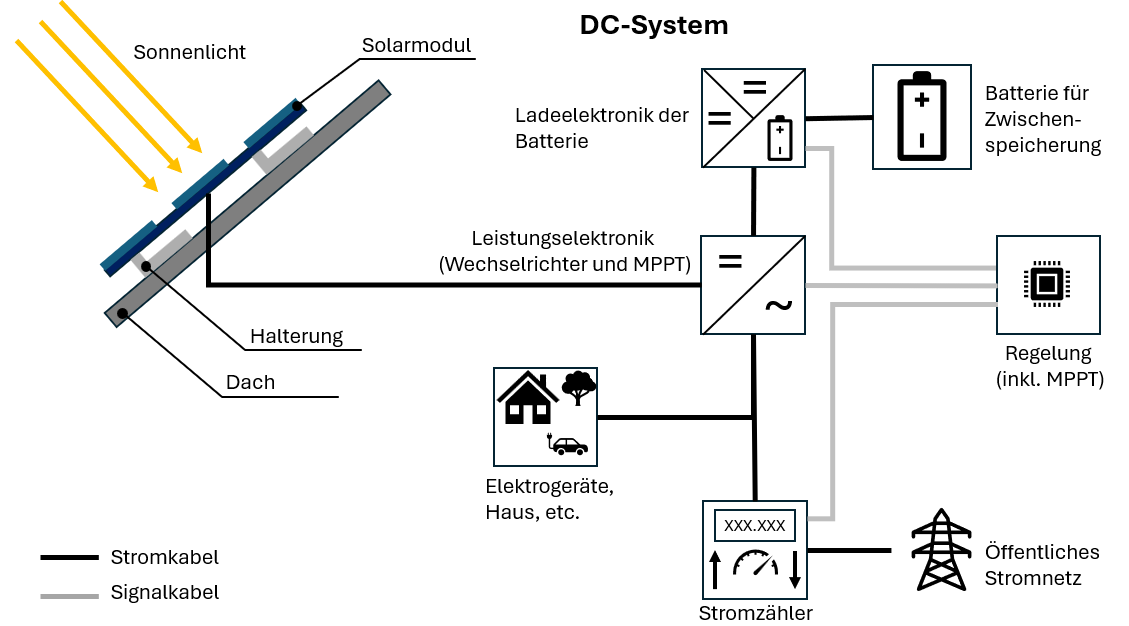
The path of solar electricity can be divided into five main steps:
1. DC Generation
The solar modules convert sunlight into direct current (DC). The voltage produced depends on the number of cells connected in series.
2. MPPT and DC Optimisation
The Maximum Power Point Tracker (MPPT) continuously adjusts the operating voltage to extract maximum power from the modules. This is particularly important during variable cloud cover or partial shading.
3. AC Conversion
The inverter converts direct current into grid-compliant alternating current:
- 230 V single-phase for small systems
- 400 V three-phase for larger systems
4. Feed-in or Consumption
The alternating current flows either to household consumers, into a battery storage system, or into the public grid.
5. Measurement and Billing
Electricity meters record consumption and feed-in for billing and energy management purposes.
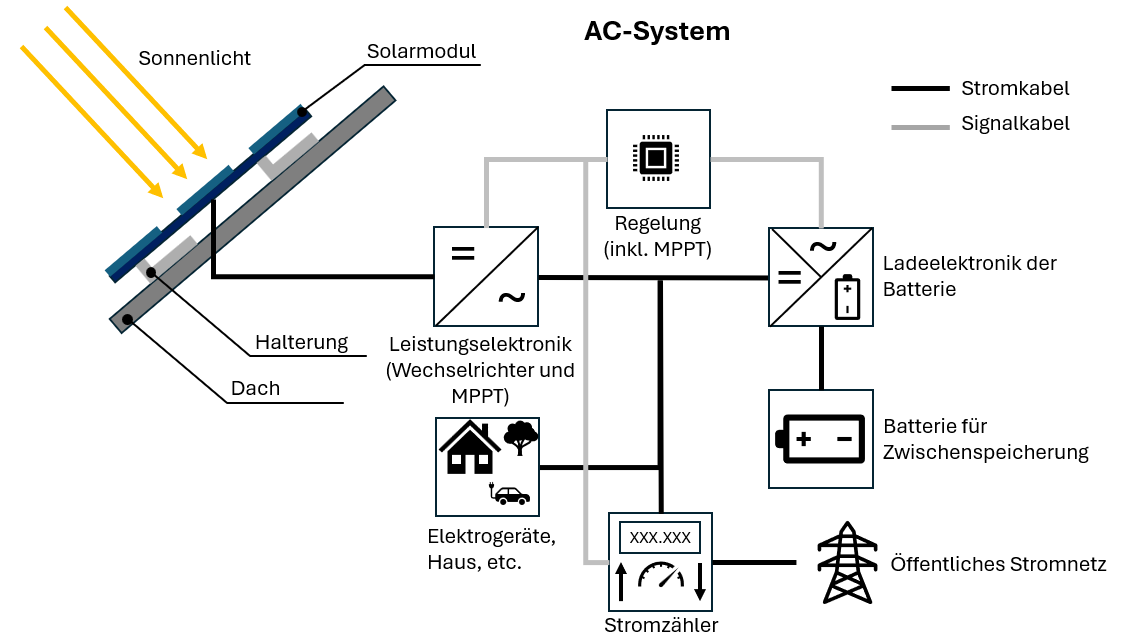
Battery Integration: AC vs. DC Coupling
Solar systems with an installed battery have an energy buffer. With intelligent charging electronics, electricity can be stored as needed. Overcast days are bridged, sunny days used for charging.
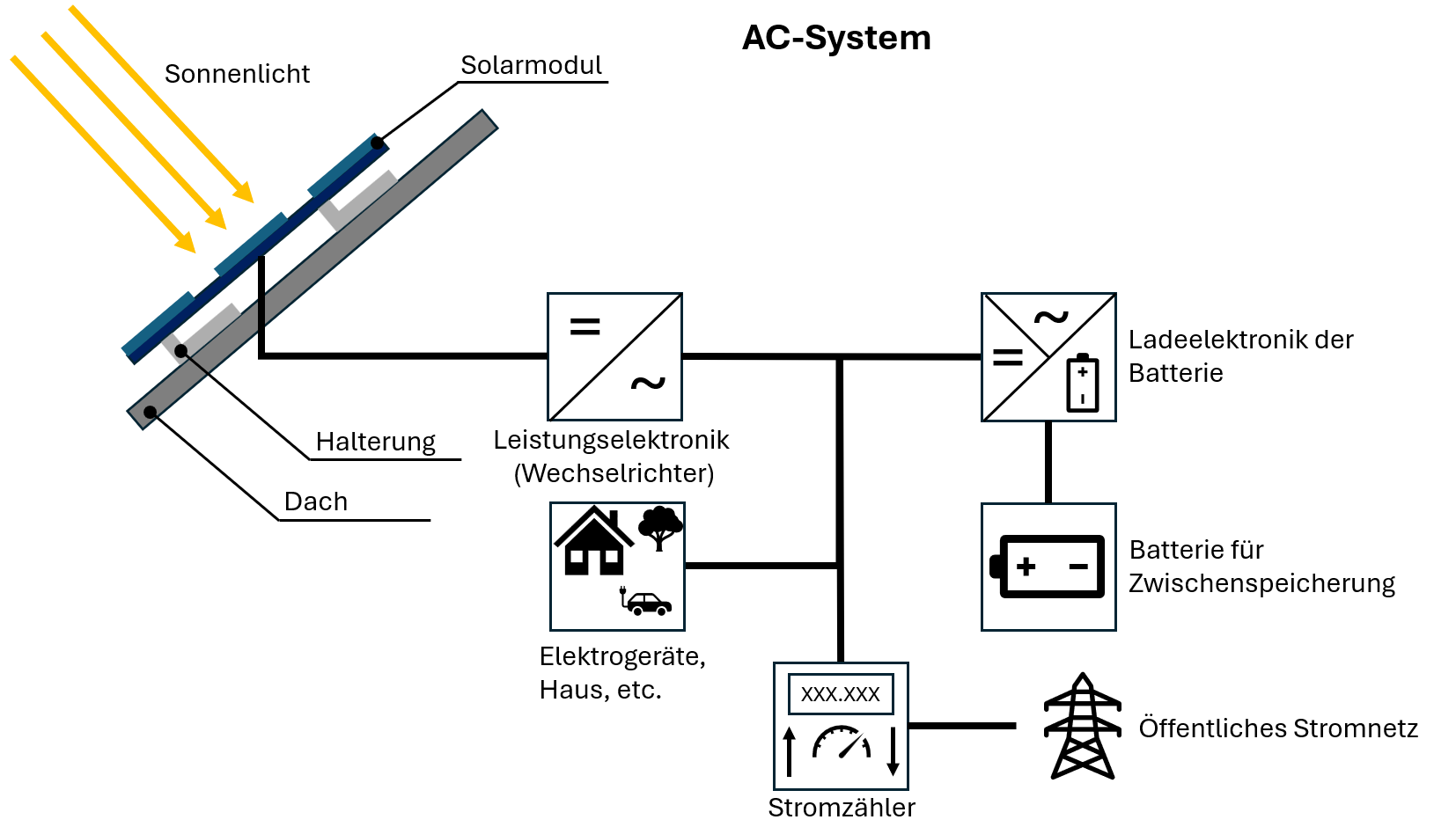
AC-Coupled Systems
- The inverter sits directly behind the modules
- The battery is charged and discharged downstream using alternating current (AC)
- Additional AC/DC conversion required for the battery
- Easy retrofitting of existing systems
- Slightly lower overall efficiency due to double conversion
Advantages: Installation flexibility, independent of PV inverter, easy retrofitting
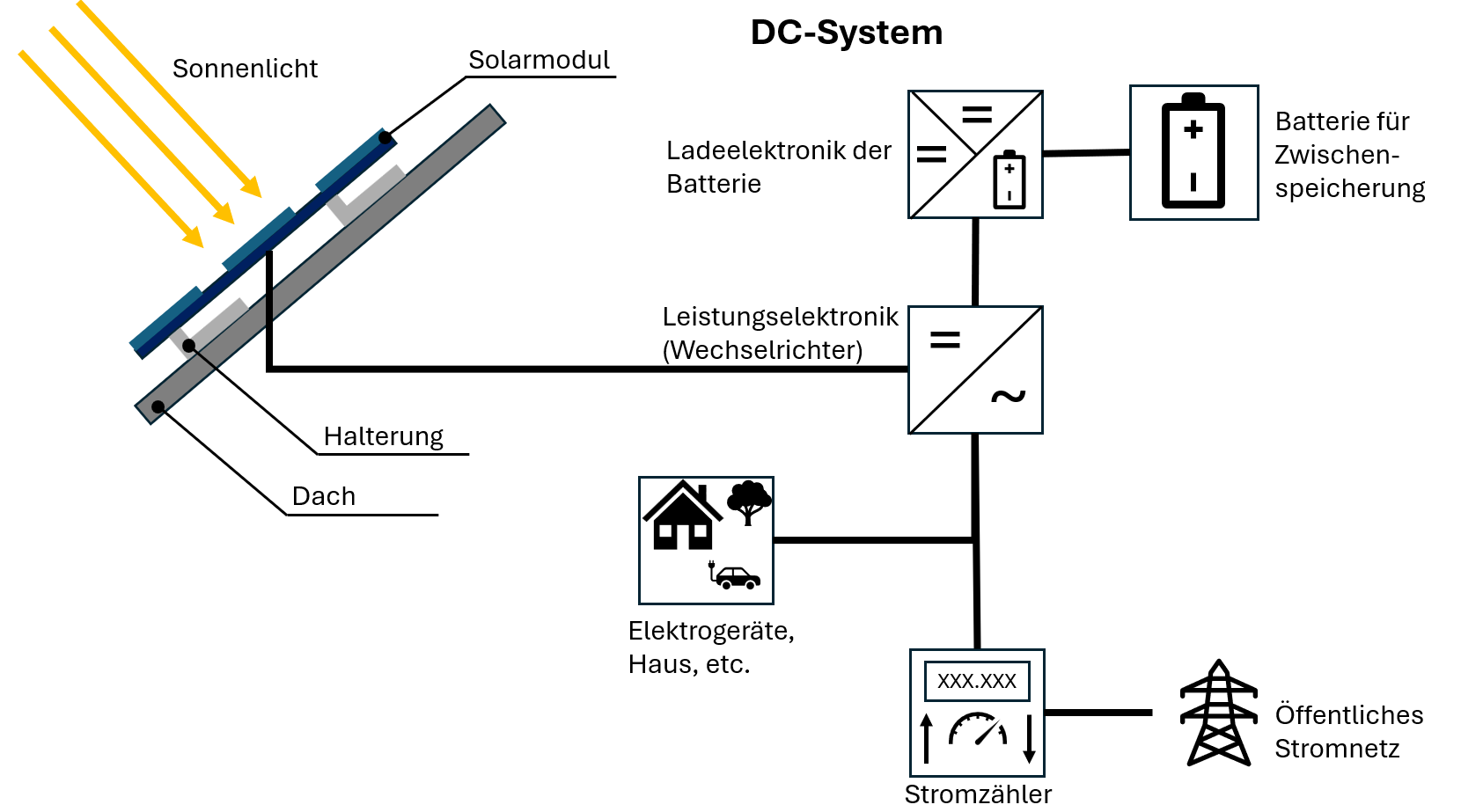
DC-Coupled Systems
- Battery connects directly to the DC path of the solar modules
- Charging and discharging without AC intermediate conversion
- Conversion to AC only for the household grid
- Higher overall efficiency
Advantages: Fewer conversion losses, better efficiency for self-consumption
Electricity Metering and Meter Types
For communication between solar system, battery and grid, comprehensive system control is required. Meter data form the basis.
Unidirectional Meters
Measure current flow in one direction only:
- Consumption meter: Electricity from grid to household
- Feed-in meter: Electricity from PV system to grid
- Generation meter: Total electricity production of the system
Bidirectional Meters
Record consumption and feed-in in parallel within a single device. Combine the functions of consumption and feed-in meters.
Smart Meters
The most modern variant:
- Digital measurement and communication
- Real-time data transmission possible
- Foundation for energy management and variable tariffs
- Communication via the smart meter gateway
Load Profiles and Self-Sufficiency
Daily household profiles fluctuate considerably:
- Morning: Low consumption (people at work), low generation (low sun angle)
- Midday: Low load, maximum solar yields → battery charges
- Evening: High consumption (cooking, TV, heating), no generation → battery discharges
For a high degree of self-sufficiency, three factors must align:
- Generation (kWp): How much can the system deliver at maximum?
- Storage (kWh): How much energy can be buffered?
- Consumption (kWh/year): How much electricity does the household need?
Conclusion: How Electricity Reaches the Socket
In Brief: A solar system appears straightforward at first glance, yet the many technical details reveal its complexity. The solar cell generates direct current, the MPPT optimises voltage for maximum power, and depending on the system concept, current flows to the battery and/or inverter. Electricity meters record all currents for control and billing before the alternating current reaches the socket or public grid.
Continue reading: In the next article AC/DC in PV: Inverters and Power Conversion, we examine the details of power conversion: inverters, MPPT and the differences between single-phase and three-phase systems.